

Pure Consciousness
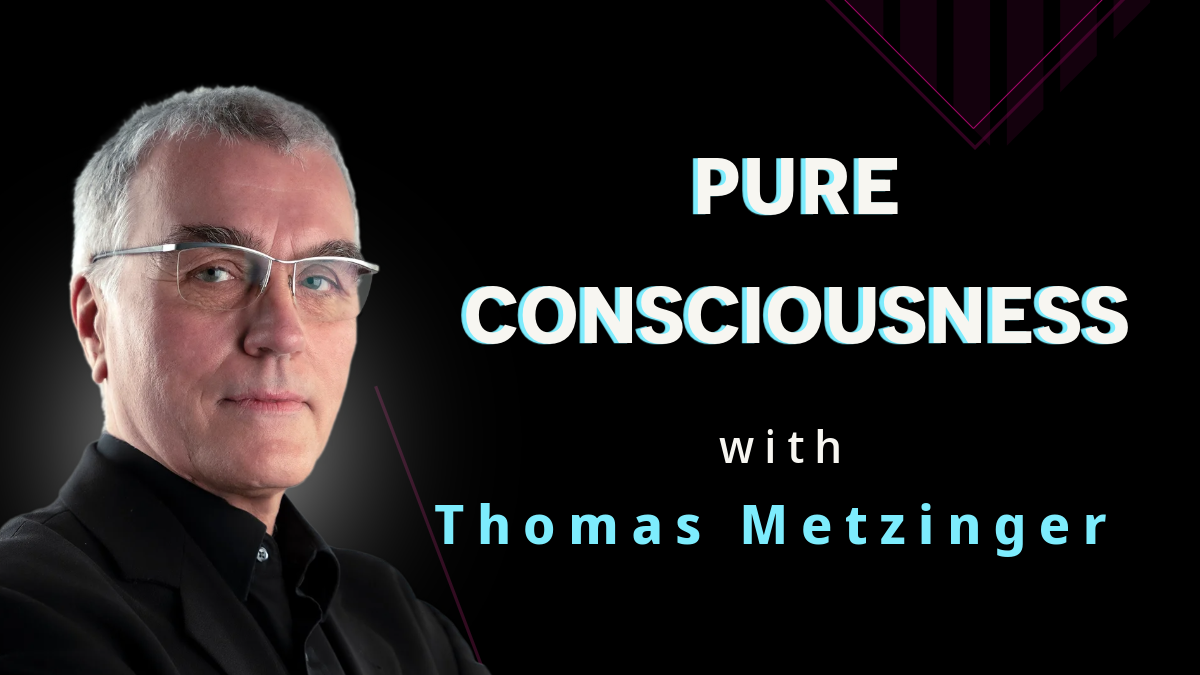
the voluntary suspension of habitual responses into awareness
AI, Suffering, Remedy and Love as the voluntary suspension of habitual responses into awareness: This episode is with philosopher and cognitive scientist Thomas Metzinger, a Professor Emeritus at Johannes Gutenberg University in Mainz and a member of the German National Academy Leopoldina. He has worked mainly in philosophy of mind, cognitive science, and applied ethics, particularly focusing on neurotechnology, virtual reality, and artificial intelligence.
The conversation explores a wide range of topics including the critical intersection of philosophy, neuroscience, meditation, and artificial intelligence. Metzinger shares his skepticism about separating deep philosophical inquiries from meditation and certain sorts of experience relative to psychedelics, while discussing the impact of AI on human cognition, the concept of suffering in both humans and machines, and the responsibility of philosophers in an age of epistemic crisis. The discussion underscores the need for a balanced and multifaceted approach to understanding consciousness and suggests that new paradigms may emerge from current technological and philosophical shifts. This episode aims to foster an expansive and hopeful outlook as we move into the new year.
00:00 Introduction to Fundamental Issues and Meditation
00:44 Epistemic Crisis and AI Concerns
01:15 Buddhism and Suffering
02:09 Philosophical Insights on Suffering and Awareness
04:47 Welcome to Love and Philosophy
05:43 Introducing Thomas Metzinger
07:43 Thomas Metzinger’s Contributions to Philosophy and AI
09:53 Exploring Minimal Phenomenal Experience (MPE)
13:49 Narrative and Pure Awareness
22:09 Philosophical and Scientific Exploration of Consciousness
29:30 Thomas Metzinger’s Personal Journey in Philosophy
56:11 Criticism and Meditation
56:55 Epistemic Authority and Consciousness
59:27 Embodiment in AI and Philosophy
01:01:52 Challenges in Academia
01:05:31 AI, Critical Thinking, and Future Concerns
01:15:29 The Nature of Suffering
01:22:50 Compassion and Love
01:44:12 Closing Thoughts and Reflections
01:44:30 A Poetic Farewell
The phenomenology of ‘pure’ consciousness
Link to Elephant and the Blind full book
New book Bewusstseinkultur
MPE discussion mentioned in Intro
Philosophy Babble conversations
Beyond Nondual: Not one, Not two.
There is nothing in a caterpillar that tells you it’s going to be a butterfly. Buckminster Fuller…
Thomas Metzinger (1958 in Frankfurt am Main, Germany) was Full Professor of Theoretical Philosophy at the Johannes Gutenberg-Universität Mainz until 2019. He is past president of the German Cognitive Science Society (2005-2007) and of the Association for the Scientific Study of Consciousness (2009-2011). As of 2011, he is an Adjunct Fellow at the Frankfurt Institute for Advanced Studies, a co-founder of the German Effective Altruism Foundation, president of the Barbara Wengeler Foundation (2019-2024), and on the advisory board of the Giordano Bruno Foundation. From 2008 to 2009 he served as a Fellow at the Berlin Institute for Advanced Study; from 2014 to 2019 he was a Fellow at the Gutenberg Research College; from 2019 to 2021 he was awarded a Senior-Forschungsprofessur by the Ministry of Science, Education and Culture. From 2018 to 2020 Metzinger worked as a member of the European Commission’s High-Level Expert Group on Artificial Intelligence. In 2021 he was awarded the Pufendorf-Medal, in 2022 he was elected into the German National Academy of Science.
In the English language, he has edited two collections on consciousness (“Conscious Experience”, Imprint Academic, 1995; “Neural Correlates of Consciousness”, MIT Press, 2000) and published one major scientific monograph (“Being No One – The Self-Model Theory of Subjectivity”, MIT Press, 2003). In 2009, he published a popular book, which addresses a wider audience and discusses the ethical, cultural and social consequences of consciousness research (“The Ego Tunnel – The Science of the Mind and the Myth of the Self”). Important recent Open Access collections are Open MIND at http://www.open-mind.net (2015, with Jennifer Windt), Philosophy and Predictive Processing at http://predictive-mind.net (2017, with Wanja Wiese), and Radical Disruptions of Self-Consciousness (2020, with Raphaël Millière). In 2024, he published a major OA-monograph with the MIT Press titled The Elephant and the Blind (see also top of page).
TRANSCRIPT
📍 I could never understand when all the other kids end of high school thought about what they wanted to, uh, to do, how one could start a life without having looked at the really fundamental issues first.
How can you be seriously interested in philosophy of mind and consciousness and not meditate?
I thought it was so shocking that you have great minds and super sharp analytical minds, much more intelligent than I could ever been. And they are so impoverished in their personal lives
I think a very good term. I dunno who coined it as an epistemic crisis. I mean, we're in danger if we don't only have these language models, but if we get high resolution, uh, avatars very soon populating our environment that mo large parts of the population will be completely confused and believe a lot of stuff.
I think we could still kill all, kill ourselves with non-biological intelligence.
Life is not something to be glorified. And there's a turning point in my intellectual life was when I was 16 and I read the first noble truth of Buddhism, all life is suffering.
What is suffering? And people have shocked me. I said, if you said, if you get at that, if you research that, then you will, get suffering ai. because will people will make formal implementable models of what conscious suffering is to get a really precise theory.
And then, then you are there, you're contributing to the process.
And so there are, I think that in some traditions there are also, it's even called the remedy. I mean, it is, it's the remedy of just being with it in choiceless awareness and that you have a very, very deep sense of validation and insight doesn't mean you've had an insight.
How can anybody hold the suffering of the world and just look there without going insane? Without becoming bitter or starting to do philosophy or something weird?
For me, there is a capacity to see that other human beings are horrible and wonderful at the same time.
Don't touch, don't correct.
Don't suppress, but su suspend it in empty, open awareness, suspend it and let it flower. Don't suppress, but su suspend it in empty, open awareness, suspend it and let it flower. And what you, Krishnamurti always said something very similar. I said, don't look at me, test that out. What happens if you just feel it directly? And are with it without trying to correct it. What happens? I'm not gonna tell you what happens.
Now of course, the intuition, I don't talk about this in the public because it's too wild for many people, is, but if we don't understand this and uh, we don't somehow learn this, we're gonna a, get blown away by the AI revolution.
And then the planetary crisis in climate and everything. In principle, we would have to learn that, To, to deal with all the majority of human beings who actively, you know, uh, make it worse or who just live in full denial or whatever.
It's, the question is if there can be a stance very hard where you can do more even of that and not get burned by the negativity. Not get burned. And I can only say, I think I've understood that, early on, but I'm very bad at it. I can only do it sometimes when I'm good or when I'm very alert or open and I get, go off into judging and being appalled very fast.
I don't know how it is for you. Can you, can you hold that a lot? 📍 📍
Hello everyone. Welcome to Love and Philosophy where we try to move past the usual either or tensions with care. I'm Andrea Hiott, and tonight we're gonna do something a little bit different, something that just kind of feels right for crossing into the new year. in a few minutes, we'll be in
2026. Maybe you're already there when you listen to this, but this is gonna post right, between years at least, in the Eastern time zone. And so I wanted to spend these final moments with a topic that is so expansive and also so detailed. And that is pure awareness … ( for full audio of intro, see audio podcast) 📍
so here's my conversation with philosopher and cognitive scientist Thomas Metzinger. crossing thresholds. I wish you a happy New year. I'm really so glad you're here and I just really appreciate you. I want you to have a good year.
I really do. Alright, bye.
All right. Hi Thomas. Thank you so much for being on love and Philosophy. It's really wonderful to have you here.
Yeah, thanks for having me.
So I kind of wanted to walk through your biography a little bit as we go, and tell me how you became interested in these subjects, which you've been working on your whole life.
well. That's of course a long story and I don't. Want to put too much of my personal life into the public, uh, because I basically, I think it's irrelevant.
somebody's arguments or ideas should be judged completely independent. That would be what is called a psychological fallacy and, and, and, uh, in, in philosophy. But I don't know. Um, I could never understand when all the other kids end of high school thought about what they wanted to, uh, to do, how one could start a life without having looked at the really fundamental issues first.
I didn't get it. Like they, um, they wanted to study medicine or law to make a lot of money or this or that. But for me, it was always obvious that you just cannot, at the beginning of your life, just do something, learn something, and then go and earn money with that. Uh, I always, uh, thought you have to look at the fundamental issues in a professional way.
Then I was, uh, quite soon, deeply disappointed in the Frankfurt Philosophy Department, uh, which was all Frankfurt School at the, at the time, all very fluffy, uh, um, political stuff, not radical enough for me at the time. Uh, um, I was on a lot of demonstrations and, and, and, and and things, uh, in the seventies actually.
I mean, that's a wasting time with anecdotes. I want, I still, no, I went on my first demonstration at 12. I was in the good gym Frankfort. Whoa. And the streets were full, and we were all marching, all high school pupils with the, um, with the big guys and the students we admired. And I was shouting with a large crowd, francoist and murder on fascist.
And I didn't know who Franco was, and I didn't know what a fascist was, but I knew this was right. You know, uh, that kind of atmosphere. It's, it's all very different now. But at the time when I later studied, it was a very political thing. And uh, and there were like. Demonstrations in a certain period, also violent demonstrations practically every Saturday.
And that was kind of the, the background, uh, what it meant to study, um, philosophy in Frankfurt. I even had a, and how do you say, an overprotective father who tried to find out what the best philosophy department was and they told him tubing in is good. But, uh, then there was Tina. So I had to stay in Frankfurt and I was completely disappointed.
After five semesters I wanted to stop. Um, I found basically nothing that resonated in any way with me or seriously caught my interest. And I just did my ma because I had so many credits already. I thought it was, uh, at the earliest possible time in eight semesters. Um. And I didn't study properly. Um, but by my own standards today, I didn't really study and, you know, I had to go to India or be, be on the ban West, uh, do serious stuff.
It's interesting because even just your philosophical biography for someone like me who, I studied German philosophy from the United States, but I feel like you've sort of set a kind of new orientation that a lot of people now coming into philosophy take for granted in terms of taking neuroscience seriously, for example, or the interdisciplinary nature of what can be a philosophy degree.
So I'm in really interested about that moment when you were in Germany and like that was a kind of continental. World. That's right. That probably seemed like it couldn't change. Right. I guess that's what you were annoyed with, but I imagine it wasn't an easy step to start going to where you are now.
I could've, I had a much better career if I hadn't done this. If I had learned my hunt by heart and then just produced, uh, you know, endless German idealism round 27 or something, um, I could've had a much better thing. So there were like, in systematic turning points, there's a philosopher Swiss philosopher, Peter Buri, who was in Heidelberg, but who you probably have never heard of.
And he was very important because he published in 1981, a German book, an alluded philosophy, disguised this. And he in a way, poisoned a whole generation of young philosophers, me included, because we certainly saw. Oh my God. I, I got really drawn into Anglo-Saxon analytical philosophy of mind because it's a, my God, in other areas, on this planet in Australia, uh, uh, in the US and the uk, um, philosophy hasn't stopped, you know, uh, it hasn't stopped.
There has, and in Germany, all teacher disciple, um, Jewish intelligence had been murdered and driven out of the country. All teacher disciple relationships, um, had been cut, and mostly for us also, the 1968 thing that was maybe in the US was more hippies and Woodstock was this.
Um, and what was it, uh, that our tribe committed the greatest atrocities in the history of mankind that were the things we were thinking about. And, uh, that was the lens through which we were also looking at traditional philosophy. And then I suddenly saw this, I mean, I have a different view about American philosophers, maybe now, but at the time I was just so impressed when I met all these guys as a PhD student.
I met de in the swimming pool, in the, in the tif, and you know, all these people, John Hoag and Jack one Kim, and how they can. Walk up there in short pants and sneakers and jogging gear and give these crystal clear lectures and this, this, um, you know, rigor and the intellectual honesty as opposed, um, to that one of my British PhD students, um, uh, um, coined that fantastic term for me, continental jazz.
Uh, so the continental jazz in which I had grown up. So I got into this, uh, got really interested, uh, in my PhD thesis. But then as you indicated, my project over the last 35 years has been. Opening analytical philosophy of mine to interdisciplinary cooperation. So that's what I did with people like wife singer, for instance, from the Frankfurt Max Plan Institute.
So I always organized exchanges with ai, community neuroscience. And the funny thing about what you just said is I just come back, I had to give the min last week, and there were students, advanced students who had done nothing but study my work for two semesters and all trashed me for one and a half days.
I got completely refreshed and uh, one of the presentation by three students was called in the neuro tunnel and they completely criticized my completely naive relationship to neuroscience and, and, uh, why only the neuroscience that. You know, why only that discipline and all the things neuroscientists don't understand about their own research.
It was really refreshing.
Yeah, I was going to bring that up too, because I feel like we're at a weird turning point now. Almost like coming back to where we started and knowing it differently, you know, because it's so taken for granted that the neuroscience, it's almost like the neuroscience has become the philosophy and now you see this kind of pushback against that.
But when you started, you said you could have had a much better career if you hadn't done that. Sure. So that's a huge arc, right? To come Yeah. To where you're being criticized.
Oh yeah, yeah, yeah. Um, so just to give you an illustration, when I entered.
The Frankfurt Philosophy Department at the age of 20, it was normal. They told young people like us, uh, if anybody thinks empirical sciences, like the neurosciences could have any relevance at all for philosophy. They haven't understood what philosophy is. You know, that was a very serious announcement.
It's all transcendental conditions of possibility for knowledge. Whoever thinks any empirical fact could play a role, um, is deluded, hasn't got it. And um, yeah, that has changed. I mean, now we have about five places in Germany where if you want to, you can study philosophy and cognitive science really well and, um.
What did the neuro phenomenology come in? I mean, I know you wrote your book, I think you wrote your book being No One with the Churchlands. do I remember that correctly? Well,
no. I wrote a habilitation thesis, which had a much more serious title. Okay. About, and the theory is in there, but it's embarrassing now.
Don't look at it. So it's, I I'm really embarrassed by it, but, well, that's a good sign
actually. We should all be embarrassed, right? By our early stuff.
Are, are you two?
I think, I think everyone is. I mean, I think, you know, if you're not changing, then you still believe the stuff you, you did then.
Thanks, thanks
so much for this. I'll quote you for the rest of my life. I think it's true. So, no, the, the German book was called S Model. So the actual philosophical idea was what is the relationship between the epistemic subject. And its phenomenal self model. What is that relationship? Nobody ever gets it today.
They're just this guy himself is an illusion. And, and it's the only thing that got through ever in, in the, in the public. And, uh, then I had a long subtitle and, uh, I said, and I always, I still think that, that the problem of consciousness is many problems and. I thought at the time the central, the most important problem is that it is apparently tied to individual first person perspectives.
And in that sense, irreducible irreducibly subjective. So the perspecti, um, of phenomenal consciousness seemed to be the core of the issue. And so the subtitle was the Prospectivity Phenomenon and both signs for the, and natural theory against the background of a naturalist theory of metro representation.
That was the project. Could Perspective Highness be dissolved like this? Um. Then I organized a i, we founded the SSC in 1994. I organized SSSC two used, have the talks from 1998, ruined a whole life, a year of my life in Breman and the Churchlands got me over to UCSD for a year. Uh, I had two good years. I'm now in looking back mode in 40 years in academic.
That was one of the two, two really good years where I flourished. Had a fantastic environment, super working conditions, you know, um, that was good. And so I sat in the eighth floor of the humanities and social sciences and wrote being no one. And I thought. Uh, sorry.
I should just show people like, it's a very big book. Yeah. The English version. So you were doing a lot of writing.
Yeah, I did a lot of writing and, um, the, um, uh, I thought Americans need something more cr crude and something more loud. And that's why I called it being now no one
thanks a lot
and I have to have to pay the price for this for the rest of my life now.
Yeah.
You figured out the, you figured out the recipe, so now you're trapped. That's what happens.
Yeah. It's all marketing and, and I have to try some, some radical marketing there. Um, yes, and the interesting thing is because you ask about neuro phenomenology, so I have only really met. Francisco Barilla twice in my life and like each other very much.
I never forget, he invited me and Chalmers to um, Paris and he listened to my talk about the self model and he said, Thomas, everything you say is completely right, but you are doomed and you're lost. You have no chance as long as you stay a representational list. It's all faults because it's representation.
That was so funny. And uh, then there as you know, there is this neuro phenomenology tribe, also my friend Evan Thompson in in philosophy who try, um, to tie it, you know, to certain phenomenological traditions and Buddhism and the way, that's just what I wanted to say. The way I use neuro phenomenology in being no one isn't actually that usage, I thought.
It, this is the project. That's what I want to do. Neuro phenomenology. Um, but it had a, for most people today, the term means something else.
I So it was more like Patricia Churchill's use of or? No, not all. I had to. 'cause you know, that's what a lot of people think
of too, to three kids who said, I, I'm living in the neuro tunnel.
I told them how it really was. It's not a limited system. Kids. I, I told them, I took Patricia Churchland's 1986, um, book neuro philosophy and brought it to my neuroscience friends and Frankfurt and said, here is something for, from philosophy. Don't you like this neuro philosophy? You would like it? And they said, uh, we can write a third class tech textbook ourselves.
We want. To, to tell us something about Melo poi and life phenomenology and the neuroscientists. We want philosophical work on embodiment and not that we can do that ourselves. And I said, and I said, yeah, but there's all these, you know, Paul Tar and John Bigler, and they looked at it and I said, yeah, yeah, we do that ourselves.
That's not what we need philosophers for. Very interesting, uh, reaction.
Do you think any of the critical thinking aspect of it, or the analytic part is getting lost in this kind of new shift, would
you say? Yes, absolutely. Yeah. So, um, if you look at this new book, culture of Consciousness, I have been advocating for a number of years that we should, in the educational system.
I have two things, uh, um, what I call attentional autoregulation. That is meditation practice for children and youth. And what in philosophy is called astic. Autoregulation also, which is basically rational, critical thinking, optimizing the relationship between what you believe and what you, uh, know, you know, um, there are theories, there's a technical discussion about this, and those are the two kinds of mental self-regulation I think we really need.
And, um, I don't know, in German it's called, I don't know if they teach it in Heidelberg, but I think that's actually some of the best things philosophy has to offer to society, um, because, uh, it, it doesn't work. And, uh. Of course I, were you asking about neuroscientists and critical thinking?
Uh, no. I, I think just in general, I guess what I'm trying to get at is, one thing I've liked about your work is that it's trying to hold these paradox, this paradox, but without trying to solve it, the sense of the analytic philosophy and that critical thinking and that crispness that you described.
Yes.
But also, I mean, a lot of people would associate you with pure awareness and even, uh, psychedelics and, meditation and these kind of subjects, which can seem opposing to that, but haven't been in your work clearly. Mm-hmm. And I guess with this kind of rise of everyone wanting to talk about embodiment and for cognition and phenomenology again, which is really just happening right now, five years ago everyone wouldn't talk about that in philosophy departments.
I guess what I'm saying is we don't wanna just keep flipping, from where you started in this kind of continental morass or whatever. It's very interesting, the neuroscience back to that. I mean, it's not even two, you said multiplicities, earlier.
And I think that applies here too. There's, there's something else that I'm hoping we don't lose. I guess I just wonder if that makes sense to you, in, oh, it's, that's
very interesting, Andrea. So now you have, you don't even say jazz, you say ra.
Well, I think I, I'm taking that from you from a, a feeling that I had about the way you described those early years, which, you know, were very inspiring.
Of course a lot of German philosophy is, you know, the basis for so much. It's not that we got rid of it, but I felt in your writing, you know, over the years that you were, there was a stuckness there, you know, you were pushing against it. And even meditation and all of this stuff wasn't. You couldn't talk about that then either.
I mean, things have changed so much that I just feel like we don't wanna lose sight of, of all of those things. And that's the hard thing mm-hmm. That I actually have felt in your work for 30 years, but that I would hope people don't lose. Right. Because it's so easy to see one side or the other and stick to it.
Yeah. Yeah, yeah,
yeah, yeah. Yeah. So that, Hmm. Uh, how to start. So, of course, for me. It has always. So I started to practice regularly before I started to practice philosophy at the age, uh, of 18. And it has always been clear to me that, um, there's this wonderful, um, German idio of an ounce of entre on, uh, can, and I never know how to, um, so a serious interest.
And I think the best English translation is, is in epistemic gain. But I never know what the good translation would be or epistemic progress. And I've always had the suspicion, I mean, many people would think this is crazy, but how can you be seriously interested in philosophy of mind and consciousness and not meditate?
Or experiment, uh, with psychedelics a little more seriously. You know, I, I really, um, I, it's totally okay if somebody says, I'm simply afraid of psychedelics, from what I've heard, that's okay if you don't want to do that. Um, but meditation is benign and subtle and, and slow and is for almost everybody. It's, it's doable.
And the interesting, um, effect is you have many neuroscientists that actually actually have a practice. And you have cognitive scientists and psychologists and almost no philosophers. You know, there's Michelle Hamper in Zurich and Evan Thompson maybe, and then you have no practitioners. And I also, with my PhD students, I went on retreats, uh, short intros in, in Switzerland twice, and then we had a.
Little conference where he gave mock lectures to each other and they said, oh, this is so great. We felt so much more like a group afterwards, and we've listened to each other more than we have ever listened. Really good listening. Nobody started to practice, you know, they all liked it. They all thought, this is good.
Nobody picked up a practice. And I wonder what this is about, philosophers and intellectuals, uh, that they have this resistance against, I don't know how you would call it, like multi-track epistemic, um, exploration or, so
Well, it sounds like Thomas, you had a kind of. Confidence that a lot of people don't have.
I don't know if it came from meditation or what it came from. this kind of, you know, your signature of knowing or whatever was a bit different because I think a lot of people in my experience are, are criticized. Right. And you have to be able, like you, you you were gonna do the neuroscience and everything and the meditation, and somehow you are able to hold the multiplicity.
Who knows how some people can mm-hmm. Maybe it's meditation, I think. I think that helps. But I think when you're trying to choose a track or you are even just talking with your peers often, and hopefully this is changing, you feel like you have to choose between something like. Believing in whatever meditation and all of that is doing, because it gets associated with a kind of mysticism or a kind of not serious kind of track.
Oh, sure. Versus the analytic where you're doing the logic and you're serious.
Oh, they're not really serious. Right. To pull off this, I mean, what is your target you want to do tenure by? You want to get tenure by outsmarting. That's an interesting word I learned in America, outsmarting.
Other people I didn't know before. You know, this is all. I thought it was so shocking that you have great minds and super sharp analytical minds, much more intelligent than I could ever been. And they are so impoverished in their personal lives if they, especially guys, because it's mostly guys. I mean, the only thing they can do is to get close to each other, is get drunk to, uh, together one evening and then they call each other by first names next morning.
So I always thought, what is happening? What I see in academia, this know this, this crippling way of doing philosophy of becoming mere intellectuals. Disembodied, yeah, yeah. All that. That cannot be it. But on the other hand, you know, I've kept my meditation practice basically secret until three years ago or so.
Uh, but. Of course people think, okay, now he's getting, I don't know how we would say that. Wacky pre sile dementia. Now he's retired, now he's coming out with this shit. And nobody will of course say, um, uh, okay, this is, like you said, this is not serious. This is crazy also. But they will all inwardly turn away if they see some, somebody does something like that.
So I think what shouldn't be underestimated is how strategic people are. How competitive they are, um, how they will, you know, use opportunities to make somebody else look bad or stupid. You can really ruin your reputation very easily in Ade Academia without anybody saying anything, I just, people, people just know, oh, okay, now it's, now it's meditation.
Okay, bye-bye. And in a sense, they are right. You know, uh, um, wasn't it Hagel who said very arrogantly, the kind of philosophies, the vites layer. And so Indians don't have philosophy, but they have wisdom traditions.
Well,
it's not actually true if you look at the history of Buddhist philosophy, but there's something to it, you know, and most of the representatives of something like meditation, which you see in the public, this is appalling to philosophers.
Right. Uh,
I just think that we can go the other way too, you know, in the way that you are getting criticized now, right? Where we, we say, oh, everything's in the brain, and, mm-hmm. You can not take that seriously. So I, I mean, for me it's, it's about.
That flip flipping back and forth thing is what I'm hoping changes, from a lot of the stuff that you've been doing. Because yeah, that sort of shocks me, that you only started talking about, you mean your actual personal meditation practice? You only started talking about three years ago, because you've definitely been talking about subjects relative to meditation for a long time.
I mean, you know, and, and the Elephant book is all about it. And I guess you just mean you didn't talk about it personally.
Mm-hmm.
Is that, is that, well,
the thing is, I mean, there's of course a deeper issue behind it.
It's, um, the epistemic authority say, um. Somebody takes psilocybin and has a deep, deep, deep insight about the nature of consciousness and somebody else meditates and has a deep, deep, deep insight. And then you have say, philosophers cooperating with neuroscientists, and they have an idea of about the neuro correlate or whatever, computational model of consciousness.
I mean, who in cases of conflict who, um. Decides, and I'm very old fashioned. I think this theory that has the better predictive su success, that theory wins. So what I've called in the elephant, the E fall fallacy and the C fallacy, I don't know if you remember that. Uh, I mean, just the fact that you have a very, very deep sense of validation and insight doesn't mean you've had an insight.
We find that, for instance, in ecstatic epileptic seizures too, that people just before the um, uh, attack have a very, very. Phenomenology of knowing that they know. So that's not an indicator for knowledge. And of course, many people from the meditation traditions and a lot of, let's start with a meditator.
They make wild epistemic claims, which are completely bizarre from a theory of science or, you know, academic epistemology perspective. So that disqualifies them for many. And then in, I don't know if you've heard that, uh, in, in psychedelic research, they have this new term ontological shock, uh, that many people develop weird metaphysics after a certain time.
The latest example being, uh, Christoph Ka, you know, I dunno if you've seen it. Uh, he was, for all the time you, we've known each other for ages. He was at Caltech. I was in San Diego. There. The ultra ideological reductionist, you know? Uh, and now very late in his life, he does this and he becomes a panist and an idealist.
Um, so that's a way of flipping back, back and forth. But I wanted to ask something about you. Were you indicating that this fashionable, I mean, embodiment is not that young actually, and I just, as I told the kids in Munster, it started not really in philosophy, but in ai, the whole branch of robotics, the whole idea of roboticists was to start with embodiment, because you don't get to robust intelligence.
And then there were maybe 30 years of embodiment. Um. In philosophy, a debate, and now it starts this EEE, EE thing. Uh, are you saying this is, this is the morass again? Uh, no,
there's something to all of it, but it's very hard to say that.
I mean, even, you know, in academia, right? This is not like an easy position. I love computational functionalism, all of that. Like, I love analytic philosophy. I also really got a lot from four E so-called, you know? Mm-hmm. From Ella, from all this and trying to talk about those together.
You pretty much got shut down really quickly because
Yeah.
For whatever reason, and I think that's changing, but I, I, I worry it will go all the way the other way so that every, oh, I see. Four E thinks you can't be analytic and for me. The actual kind of transformation to look at, like you, you know, your, your terminology or something would be holding those in a different way, which might be something I've seen in your work,
ah,
over time.
Because you're doing all of it, right? Even if you don't use the terminology you find whatever words are gonna speak to whatever audience, you know, in the way that you were saying I, I see it all there. I mean, you, you've been talking about the body since the beginning, but you've also been trying to understand what is this first person perspective, does it require a body, does consciousness require certain kind of body?
But you're not talking about it in the language of four E, but like you said, I mean, a lot of it's coming out of robotics, AI studies. Yeah. Um, so I guess what I'm trying to, I wanna open up with this whole thing is that. We don't have to choose a side with all these things, which it feels like we have to often.
Very
good idea. Yeah. Not choose. I mean, that's actually one of the deepest spiritual pr uh, principles, choiceless awareness. Uh, you find us in people like Jay, Kris, Morty, and Medi. Many other of these teachers, um, can one, see the value in all of it. But, um, in reality, I think it's hard to understand the careerism in academia.
And the problem is it's all smart people who are very strategic, so they try to form movements or clubs or little cults and they hope, hope that some influential people there will get funding and money. Um, so, uh, it's. There is a pure analytic philosophy called, and there is this, what I perceive in this EEEE, um, neuro phenomenology crowd that has now emerged.
Be, please note at the beginning, these were very hardheaded guys. Andy Clark for instance, and so for authors like micro cognition and the, the whole thing with the extended mind, these were people who are very close to mathematics as philosopher and computational modeling. And now it, it really looks like a, kind of woke him to me.
It's, it's, it's like, uh, being feel good. Are you a warm-hearted human being that is open and the academic quality generally is pretty low. So you also find these cults or subcultures where people who don't really make it, uh, in mainstream, in the, in the academic mainstream gather and then open their own little thing, their own little movement with the hope of getting funding there or portraying them themselves as victims, you know, of an, you know what, what I'm getting at an evil system.
And this as you, I think as you point out this, um, how do you say in English, not washes over, um. Well, it, it, it, it raises our view at the real important problems that are there and the really important issues.
and that we need the critical thinking part of it, there's a work involved in philosophy that is important no matter which of these kind of groups you're in.
Right.
Uhhuh,
it's, it's not easy to learn how to think critically about all of these things. Yeah. But
give me some standard examples of philosophy pH philosophers or movements where you think this is really lacking.
It's not that I think it's lacking, and I don't wanna like, signal anyone out because bad.
I actually think there's good stuff even in all those groups. Right? But the, the point is that, so you said, you know, how can you not explore everything in a way if you really wanna understand what. Is going on here. I mean, we, we, we we're conscious and this is amazing. what is this? Right? Maybe we, we, a lot of us when we're young feel that and we wanna explore it.
And that's why we go into philosophy or neuroscience. And I, I feel that in your writing. I feel that in your beginnings and you know what you're talking about here, but also, you know, we can, we can get carried away with that too. That we want to always feel that kind of excitement. sometimes perhaps we, we, that's what's motivating us.
We hide it with all this language. Mm-hmm. And then maybe at the end of our life, you know, then we kind of re let ourselves kind of release back into that. I don't know if there's anything wrong with that, but, oh, that's
an interesting, I see
there's all these controls that academia give you mm-hmm. So that you don't do that. But lately things have gotten a bit crazy All the norms are changing. What would you perceive as, really
crazy? What, what do you perceive as really crazy?
I feel like with AI changes, with large language models, with a lot of things, what we've taken as maybe standard mm-hmm.
And just assumed will continue into the future regarding education, regarding how we write papers, regarding everything is up for grabs in a way, or we don't know what's gonna happen and there's a foundational looseness to our relationality, you know, like
it's
shifting. And I think some people just think, well, I'm just gonna go for it, so to speak.
like this is what I think, and maybe it's crazy, but maybe that's what I have to be. Right. Because in other areas of life we see that too, that craziness in terms of being extreme, letting yourself mm-hmm. Unleash.
Mm-hmm.
Seems to be getting a certain kind of attention. I think in the long run we, we see what happens.
Right. But in this very moment, it just, I don't know if you feel that at all, that there's a, a change in constraints. I don't know if I could say it like that
or philosophy or For everybody, yeah. For
philosophy, but related to everything else that's going on in the world. Hmm. In terms of what we might've thought could never happen.
Oh, yes. Yeah. Well, I think it can happen. Yes, of course. So I can, okay. I'll tell you another anecdote. I, maybe you've heard me telling this. When I took my pH PhD in 1985, I didn't know what to do. And then I was allowed, which was a bigger procedure, procedure at the time, in 1987 to teach my first seminar ever.
And I taught a seminar on artificial intelligence and philosophy. That was the first thing I ever did. And I still remember I came in and the room, the largest room was black with people. I couldn't go get to the blackboard because everybody thought, why does this young guy have to push through? Uh, you know, he's, he can't be.
Uh, and it took me a few weeks just, I mean, basically I think the mood was, we don't know what that is, artificial intelligence, but we are very sure it's something that has to be prevented. Uh, it's probably, as I often said, a very cool word at the, in these times among students was proto fascist. It's probably proto fascist, you know?
And then I had to tell them that there was a whole philosophical discussion there. They didn't know our own sloman, the space of possible minds and had to, let's read these papers together. Everybody said it's never gonna happening happen. AI and it's bizarre and science fiction and nonsense. And now look at the situation.
Um, I think a very good term. I dunno who coined it as an epistemic crisis. I mean, we're in danger if we don't only have these language models, but if we get high resolution, uh, avatars very soon populating our environment that mo large parts of the population will be completely confused and believe a lot of stuff.
And it's going to, as you mentioned, critical thinking is gonna be very hard to get a foot on the ground with a flood of, uh, you know, the flooded zone with fake news. But now presented through photorealistic avatars, we, we may get into a situation that is really, really weird and. Actually, actually philosophers would have a high risk responsibility in a situation like this.
Philosophers should be like a source, how do you say, of non fake, like really good journalism you trust. That's what philosophy should do in these situations.
that's that critical thinking. Yeah, but it doesn't have to give what, it doesn't have to give up on the embodiment and this understanding that comes through something like meditation or mm-hmm.
Even what you were describing as psychedelics, right? Where did
I read this? You know, I'm concerned about one thing, Andrea, so of course. A language model learns critical thinking just like that, and informal fallacies. It's much better at arguing now than human beings, nor are these guys who tested a reasoning model on some Reddit, uh, um, thing in the internet where people, there's this red thing I think called Prove me wrong, where people debate mm-hmm.
Um, outrageous claims.
the, the. I don't know what the English term is. The convincing power or something of an undercover language model is six times higher than that of human discussants on Reddit because it knows critical thinking, so. Well,
yeah. But it knows that because it's trained on every, argument that's ever existed, which we can't hold as, you know, our kind of biological body.
So if we stop doing it eventually, so will the ai. It's not that, I mean, it's just gonna be trained on everything we've done up to this point. And then it, I've even noticed it, I don't know if you use large language models, but they're, lately they've become less intelligent, so to speak. I mean, they, they're starting to lose the thread a bit.
I don't know what's going on. Mm-hmm. But I think it might have something to do with so much input that's not, uh, so easily, um, Categorize a bull, but But you, you started with AI Yes. A long time ago too.
So this is kind of what I'm saying, right? You started with meditation, you started with ai, you started with, uh, I don't know about when the psychedelics kind of came on, but I know you were interested in trying to really understand from that organic place that we're talking about.
I have been very, very lucky in retrospect, very, very lucky.
Um, that I only got hold. I was very interested but only got hold of LSD at the age of 25. In retrospect, I was very, very good, uh, for my life. I would not have continued to study probably anything. Um, so, um. I'm very much concerned.
I always tell people, you've got a lot of time. You don't have to do this when you're, when you're very young. It could be that you get so fascinated that you don't do anything else for the next 10 years, basically know, basically. So, uh, that's risky. So it's in a period of five years, just to answer your question there.
Yeah. I think thanks for saying that, because I think it's really important. I don't, yeah, I, I would say wait as long as possible in a way, and, and understand what you're doing, but you brought up Illa. We've been talking about the body.
We're talking about ai. So this is just something like, if, if AI becomes conscious, or, or mm-hmm. Yeah. Would, would they need to meditate? Would,
would they require a body.
Well about the body, you will see a massive target paper by anal set is actually on the web already about biological naturalism, and with 15 replies.
I've written one to it very soon, and there is this issue. I mean, the majority, I have always been a computational functionalists, but there are some very good arguments that some of the low level functions in our embodiment. Cannot be algorithmically described, uh, or that there are things in, especially in the brain, um, that neurons have a primary metabolic function and stuff like that.
And that there are maybe on the molecular level things that are just not tractable in the framework of computational functionalism. And then the, in the end, there's a wide open debate. The intuition that many non-academics have, it has to be alive, is actually true in the end, that there's something we cannot do without this naturally evolved hardware.
Um, many very smart people are debating this. Of course, if you say, no, no, it has to be alive. Uh. You get a lot of applause from non-academics and everybody says that sounds right. Living body. Yeah. You know, and it's lived experiences and all this is, this has the right ring to it. Um, I think we could still kill all, kill ourselves with non-biological intelligence.
We could drive AI even to that. It gets something else, you know, and I also think we'll go have prebiotic systems as I call them, systems, which are neither artificial nor biological because these, um, they will develop organoids and these organoids, my, my, my speculation, you will get large organoids and then train them with ai.
And we, you will have something that is not, we haven't seen on in the history of this planet before. Forms of cognition or in intelligence. in any case, I think that the, the verdict is still out if it needs life. And what it is about the process of auto power is, you know, um, this very unlikely process of becoming anti tropic systems in an tropic universe that, that is needed to generate what we call intelligence right now.
And, uh, I'm of course very interested in if there's an essential connection to suffering there. Um, so that is why all these MPE states and the pure awareness stuff, and so of course is interesting because we want. I'm a, I'm a very, I have a lot of dark views, many people who don't like to hear and that are, hold back, I think I said it once in the ego tunnel.
I think, um, biological evolution has created an ocean of suffering and a confusion in a place of the physical universe, in the region of the physical universe where nothing like this existed before. And I, I'm not so sure if life is a good thing because it has created so much suffering on this planet, especially after the evolution of predators, uh, animals who could only live by eating other animals.
There was a time in evolution where it wasn't like that. So I think this is. Life is not something to be glorified. And there's um, a turning point in my intellectual life was when I was 16 and I read the first noble truth of Buddhism, all life is suffering. That was a real turning point because that was something I could not have conceived of before.
A possibility that that might be true. And now if you look at the topnotch theories, free energy minimization, carris, and all that today, uh, then you see from the lowest level of our embodiment upwards to cognition, it is all, it's a permanent uphill battle. It's a constant battle against prediction error, uh, against entropy, free energy spreading in the system, trying to, you know, for a certain time maintain your boundaries, the mark of blanket around yourself and not to dissolve.
And that is kind of the highest norm in our kind of embodiment and life is do not die and propagate your genes. Those are the two main norms. And in that sense, uh, we are not free. So one, I don't know if that goes your direction, but um. I think a root cause of suffering is what the Buddhists have called the craving for existence Bana.
And you find it in the best modern computational theories of life and mind you find the same thing if you look at the Kate Nave book, A Drive to Survive, uh, for instance, that is pretty much it. And a completely rational AI could not have that, it could not have a drive to survive. It could be ready to shut itself off, uh, if it a seasonal further reason for its own existence.
So as we are on this historical threshold inflection point, I think one of the most important targets it is to prevent a further explosion of suffering. In us, in biological sanction systems via ai, but also in AI itself, that that is really of highest relevance. And what we don't have is we don't have a convincing theory of what suffering is in the first place.
I've made some very, very first steps, but I think that would be high priority. What is suffering? And people have shocked me. I said, if you said, if you get at that, if you research that, um, then you will, um, get suffering ai. Um, because will people will make formal implementable models of what conscious suffering is to get a really precise theory.
And then, then you are there, you're contributing to the process. So that's part, um, I think of this very difficult, uh, situation we are in right now. If we have any ethical sensitivity at all. How to minimize suffering. And that's also, I mean, it's not only that will be one criterion. You know, you have mentioned this multi uh, uh, track epistemic thing.
Do philosophy, do interdisciplinary philosophy, do meditation, do psychedelic, something like that that you thought that was interesting. But a general, how do you say norm or goal under which you could do this is how can suffering be minimized most effectively? And the question is, I read a thing called intelligence and pain recently where somebody says, well, all we know shows you cannot have intelligence without suffering.
Uh, it's part of, and I don't, I have no opinion of that, but if that is true, that mindedness. Increased intelligence brings suffering into the world and more suffering and refined suffering. Um, that would be really bad news. You know, I don't know if you have any views on this. Uh,
well, I think since we don't have that much time, I mean, there would be so much I would wanna talk about in there, but
well make another date.
Yeah. Let's have another date. I give us 50
more minutes,
but I do wanna say this, that, you know, just in the spirit of, I mean like with the embodiment and the AI and all these things we've been talking about, as if they're opposites and me trying to say they're not opposites, because I really think, like that question Illa asked, told Illa, telling you, oh, it'll never work because of representations.
I think what we mean by representation is changing. We, we don't have to think of it as like a hi glyph in the brain. I mean, this is what I've been writing about.
Yeah.
And then you find that all of these things start communicating in a different way that all the stuff we've been doing, as if we're separate.
And I really see that as a very promising. Way to go in all these directions, including the one you just brought up about being able to see the suffering. I mean, for me, we have to come to love here at the be at at the end. And I actually, I actually think suffering is a kind of, I don't mean that to suffer is to love, but I don't see these as like, you can't separate them.
I don't think uhhuh care is a kind of tension for me and Uhhuh. That's why I think meditation and, you know, the Buddhist, all the stuff you've brought up is very helpful because it lets us be in that space marinate, so to speak, right? To talk about marinating instead of meditating, um, and try to handle that, which is maybe what I wanna bring up here at the end.
love, I know, you know, it's a hard word to bring up in these conversations, but what do you think about that word and, your elephant book, for example. a lot of people could be describing something like an experience of love in those, Descriptions that they give the meditators, if, if one wanted to think of it in a certain way, uh, from my perspective.
But I just wanna put that word there, like what does, what does that bring up for you? Does it bring up anything? Do you wanna push back?
I'm not gonna talk about anything personal here because this will be too personal, but let me start with one thing. I had an interesting moment years ago where Buddhists were trying to explain Una and meta meditation and you know, there are these two German words, fu for compassion and mid light, which is pity or whatever it is.
Pity. Yeah.
Suffering with is
Uh, and, and then they try to explain this to the Buddhist that. What mid light means suffering with another T creature.
and the Buddha just said, no, no, no, no, no. That's wrong. Uh, I mean, the right mindful, proper form of compassion is something that doesn't create suffering, not in you and not in by somebody else.
So you don't want to suffer with them. That's a complete, the German word, mid, mid midlife said that that's a complete, now that is something that is so much, I can say very difficult for me in my own life, um, to feel at least a little compassion sometimes to the ocean of suffering in this world without getting burned.
That seems to be the challenge to me, because as soon as you see how much suffering this is. Uh, and what a kind of a world it must be that enables so much suffering also in the animal kingdom permanently. Uh, it's, it's, it's very hard not to, uh, immediately get bitterness, despair or a reaction. I must close myself off to this because I just cannot handle it.
It will burn to me. And I think people have claimed this. I don't know. It's true if it's true, but maybe there is a kind of being compassionate. Maybe there is a kind of non-dual awareness that, can I say embrace all of this, maybe embrace of this with, uh. With love, with compassion without getting completely blown away.
And I think that is just, I mean, that is the thing. You have often spoken about holding things, but how can anybody hold the suffering of the world and just look there without going insane? Without becoming bitter or starting to do philosophy or something weird? No, I think
you're touching it actually.
The main point and just about everything we've been talking about in terms of like when people, why people go to extremes or why we clinging to academic groups or whatever. I feel that a lot since a kid of, it's very hard to just love actually, because you have to recognize how much suffering there is and also to recognize that the way the world works is not.
A fluffy, idealistic way, you know? Mm-hmm. There's, there's a reality there that you can't get away from. But makes me think that suffering with is also what we don't get away from. I mean, we didn't have time to go into it, but there's one thing I thought of earlier in your book. I'm not sure which one, probably the elephant book, but you talk about, you're like rushing, I think it's you.
It might, it might be a meditator, but somebody's rushing around and they're like trying to catch a train and there's a lot of stress. Yeah. You mean
washing dishes, right? Yeah.
And you didn't meditate and you, you think you have to meditate and for a moment the wor the room is meditating and you don't have to
Yeah.
Or something.
And I love that, that feeling and also the outof body stuff. Do you that
sometimes. Do you know that feeling?
I do. And, um, you know, it's, it's those moments you described too, where you don't. You're not thinking about your own thinking, but your present like that, you know, comes up a lot. No,
I see.
I have this very, very rarely, and I was so shocked about this that, uh, I immediately ruined it. Um, but I now think there was a very important thing. There was a prior, as these neuro computationalists was said in my brain, there was a prior saying, you cannot possibly meditate right now. And then this came up.
This is the time of day. And, um, I mean if you look at the Tibetan Buddhist, and so in the more advanced such, the instruction is do not meditate. There's this whole teaching of do not control, don't, don't fabricate, don't go anywhere. Just, and then they have this weird thing of, you know, just under be undistracted, but don't meditate.
And it's very hard. Uh, so the thing is to get the controlling element out, the little phenomenology of agency that is always with, I am meditating right now. Uh, and that was a very rare moment where there was a strong assumption, it is impossible to meditate right now. And it happens. And if it with a stupid control freak like me, he probably ruins the rest of his life all the time.
You know, by doing diluted as a deluded activities, like sitting down on a cushion and meditating. It's a form of illusion, right?
Well, I mean, it's towards, well gosh, like trying to maybe recognize that thing that you recognize in that moment. I mean, there's so much here because we could sound too mystical or whatever, but I think what you just said like that experience exists and it doesn't mean that.
I feel like maybe, you know, whatever's going on with the way that we're changing right now, we could change to be able to explore that space a little bit in a way that's not, that we let each other, uh, explore it, holding the suffering and the love, so to speak. And also not, that's what I was trying to get at, at the beginning, not immediately judging each other because we have to fit each other into that's not analytic enough or that's too, um, spiritual.
all those categories to me are keeping us from maybe being able to notice the suffering, which I think actually is a kind of way of learning how we can love more. I don't know if that makes, but
you see, that is one of the things that always fascinates me. I live far away in the countryside here and that some, I talk to people who never really.
I like it more than talking to philosophy professors, some crazy hunters or farmers. And the thing is, they have the most horrible political views often, and they do horrible things all the time to animals. And at the same time, they are the nicest people in a certain way, in another way, and much nicer than any intellectual city folk or something like this.
And in a certain way they have, you know, compassion for nature, although they destroy it all the time, you know? And if this, um, I think this speaks to what you're saying, this, um. How do you say this? This, uh, this ambiguity you can find, um, in other human beings once you are open. They are horrible. They say and do horrible things and at the same time, they are nice people, uh, are part of them.
I mean, there are some for whom everything is ruined, all cap capacity for compassion or awareness. But they have this corner and if you find this corner, I recently had it with somebody says, how are you today? And you say, actually quite volatile. It's up and down all the time. Then they, for the first time, they can talk about that.
They're actually sad a lot of the time and I would never open up to anybody. But if you can show that you are suffering too, sometimes in the right way, there will certainly, things will open up. Uh, and, you know, things will become possible. So I, for me, there is a capacity to see that other human beings are horrible and wonderful at the same time.
You know?
I really think that's a hard thing to do, but might be what we're all trying to do in a way, in a very, in a rigorous way, but mm-hmm. That, that's what I mean by that moment, which really struck me from that book of ' cause you're in such an extreme state of stress, and that happens too when we're all in emergencies.
Right. Then we do realize what you just said actually. Mm-hmm. Because we, we get into that state where we realize there's something. There's something shared that we can't escape. Right. And it doesn't mean we like leave our bodies necessarily to be it, but it's there. Right. And I don't know. I mean, it's getting hard to kind of put words on that, but there's something there that feels important and actually that I can see in all of these things we've talked about.
Mm-hmm.
If
we stop judging each other through the old categories.
Mm-hmm. If
that makes sense. Yeah. Um, because I know exactly what you mean. I grew up in a farm culture and there's some of the best people in the world, even though if you try to put them into like, ed, you know, the kind of university or newspaper categories, you might completely disagree.
But anyway, we're getting low on time. So is there anything that this brings up that you wanna talk about or anything else about love that you wanted? Yeah, that's very
interesting because, uh, is, it hasn't become quite clear, uh, what you are getting. Um, at, um, so let's, let's do five more minutes. The, the thing is, one difficulty in all of this is that one also has not only tried to hold them in all their horribleness, uh, but one also has actually wants to stop ma make many stop doing what they do because they also do horrible things.
And just being compassionate and understanding doesn't help. So the, the challenge is even higher, like trying to change people's minds in a way that they not auto automatically shut down or start to fight or something like that.
Mm-hmm.
Um, this
speaks to the B couture and the sort of planetary, I think.
Direction at the end of the Elephant book, which I guess is like the new book,
yeah,
I did send you a, a call, you sent it to me, but like two
days ago, so I haven't read it.
it's, it's like the, the epilogue, but with a little more substance and detail. Yeah,
I noticed that. And which is great because I think that, yeah, maybe we can talk about that book another time.
But the thing here is what happens if we don't push against that stuff? Like, it's not that we're not that we're gonna say it's okay to be terrible to animals, but instead of defend, like instead of creating our, per our, our, our, our stance in again, you know, against that, which is what kind of happens now, what happens if we take that as part of, you know, whatever it is that's shared, you know?
Is that a different way of coming at this where instead of, you know, we didn't talk about it, but this whole dualistic. Structure that I think you, from the beginning were trying to open up that this multiplicity is a word that comes up. I just do, I do feel like it's connected to that way that we assume opposition.
and I think this connects a lot to what happens when you meditate and stuff where it, it opens into more of a constellation or something. Mm-hmm. Um, yeah. So, so that, I don't know if that makes any sense to you, but to me there's something about a different way of understanding that stance.
Philosophically, I don't
this stance, how would you label it?
Uh, I think this, what I'm trying to say with this holding paradox or something where it's not that you try to solve right now, I feel like we, we don't hold it. We don't hold the opposition and then we don't see it as a opening. We instead say, okay, you can be what you are, but I'll try to change you.
Or, I'm here and, you know, there's always this.
Yeah, the, the, I think I know, I mean, this is actually deeply spiritual practice. Uh, yesterday I read an ancient, um, text for the third times called Clarifying the Natural State from the 16th century. And, and the guy always says, DIA, don't touch, don't correct.
Don't suppress, but su suspend it in empty, open awareness, suspend it and let it flower. And what you, Krishnamurti always said something very similar. I said, don't look at me, test that out. What happens if you just feel it directly? And are with it without trying to correct it. What happens? I'm not gonna tell you what happens.
And so there are, I think that in some traditions there are also, it's even called the remedy. I mean, it is, it's the remedy of just being with it in choiceless awareness and letting it flow. Now of course, the intuition, I don't talk about this in the public because it's too wild for many people, is, but if we don't understand this and uh, we don't somehow learn this, we're gonna a, get blown away by the AI revolution.
I mean, somehow machines have to be better at this than we are the stupid apes. And then the planetary crisis in climate and everything. In principle, we would have to learn that, you know? Um. To, to deal with all the majority of human beings who actively, you know, uh, make it worse or who just live in full denial or whatever.
It's, the question is if there can be a stance very hard where you can do more even of that and not get burned by the negativity. Not get burned. And I can only say, I think I've understood that, uh, early on, but I'm very bad at it. I can only do it sometimes when I'm good or when I'm very alert or open and I get, go off into judging and being appalled very fast.
I don't know how it is for you. Can you, can you hold that a lot?
I think maybe we started on different parts of this, in different parts of this kind of solar system because for me it's been the opposite. I, from a very early age, I was really overwhelmed by. Understanding love was this kind of suffering and like having no way to filter it.
Um, it sounds to me like you've been, like, I had to learn to be judgmental a little bit
mm-hmm.
To be able to kind of take that in, if that makes sense. Do you know what I mean? Um, yeah. Like, that's why I studied critical thinking and philosophy and science because it was so hard for me to structure and judge, if that makes sense.
Mm-hmm. Um, so I don't know if that, but, but, but
yeah. Different people need different things. Um, it feels like
the same thing, that it's so overwhelming, right? You can't just like sit, be there with it because there's so much, I, I think it's love and suffering there. There's so much for me, I thought of it as love, like I love my parents.
I love my dog. I love my brother so much as a kid that I can't handle it because they could die. I can't make things good for them. Like it was too, too much, if that makes sense. Mm. So you kind of, I kind of learned judgment as of scaffolding on that. Mm-hmm. But I feel like that that's, did it work? That's kind of the same feeling, huh?
Did it work
well? I mean, did it work for you? I think we're all finding our best way to survive and, and deal with it. And, um, I think that what you said about AI is actually really, really important. Even thinking of ai, not as opposite us as the machine versus life, but because we could actually, this, this whole thing we're in now, which we can't see clearly, could be the way that we can discuss this better or, or, you know, find other ways to handle all of this.
Um, because I think it is urgent in the way you said it, and it's
the urgency. Yeah. Has a, the urgency was never higher because the problem has been globalized now. And
I do feel like we, we'll have to talk again, but the way that you, you know, I know it became a cliche of that there's no such thing as a self and ego tunnel and all this, but, but actually, you know, we're at a different point now, but for people, if you go back to before you wrote all that, it was a way to introduce into philosophy how to do some of this holding I'm talking about, uh oh yeah.
Mm-hmm. Yeah,
of course it's, there are some subversive elements there. Of course, one has to do that, but an academic environment, basically something very hostile and, uh, at least I've experienced it as that, as such. And it's, um, almost impossible. But then there are people like you who can read between the lines, and there's some people who see.
Understand. That's also, I find it, just to mention this in, in closing, there are some of the people most from my MPE group, they, uh, have actually written a big paper, which I find completely, how do you say, unrealistic on super alignment. I don't know if you've heard that. Yeah. Google Super alignment. So they think there are a lot of these Buddhists and practitioners who say either this goes into the alignment debate right now, this knowledge about all that holding and choices awareness and da dah, dah, dah, dah, uh, or there will be never aligned machines.
And I think it's incredibly naive to talk about something like this, but the best of Buddhists at ran Yeshi University in Kadu and everybody, people are thinking about have the feeling. This AI moment is the moment where we ever, we either get that right. Either we get that right very fast or we're gonna just be blown away by the whole development.
Yeah, I don't think it's either or. But I think what you said earlier about we could destroy ourselves with the ai, it's, I think we're worried that the AI will destroy us, but it's more, if we don't do what you just said, if we don't do whatever we're trying to suggest here, that language doesn't really fit on so well, um, then it's very much more likely that we're going to hurt more people and ourselves and increase the suffering in the way that, that you described.
But there does feel like there's a portal or a opening or something right now where we could actually go a very different way that we glimpse, but we haven't imagined or even put language on yet, which is what I feel opening in a lot of your, you know, work. And, um, I don't know if that makes sense to you that it's not that you've, you can put it into words exactly, but.
I think there's another whole other set of multiplicities that are possible that we, yeah. If we do what you just said, we could shift towards clarifying or, or, or just sensing better.
Yeah. They have to be made respectable, uh, fast. Yeah, exactly. As it doesn't, it won't work,
which is where that critical thinking comes in.
And also where, I just wanna say thank you to you because reading your books and stuff, I, it was rigorous analytic philosophy for me. At the same time, I, I could sense the other stuff in it, and I think you might not realize what a big difference that makes, um, maybe you do realize, but that you, that you keep trying right.
To, to deal with it, I think has made a really big mark, in terms of showing some other paths are possible in that, in that sense. So,
fantastic. Thank you that you see that. But, um. After all, we are philosophers, aren't we? 📍
Yeah. And that's, that's what we continue to be and will continue to be. So.
Okay.
Uh, thanks for talking to me today.
Is there anything else that
No, I, I'll have to run now, but let's stay in touch.
Okay. Sounds good. Yeah, have a really great day. You again,
send you something small and strange right now. Oh, great.
Awesome. I can't wait. Bye-bye. Thank you so much, Thomas. Bye bye.
Okay, everyone. That was a bit of an intense conversation I realized, so I thought it's good to leave with a poem for the new year, and I found one of my favorite poetry books, which is called The Pupil by Ws Merwin. Maybe some of you know it. And I thought I'd, I thought about a poem that starts about, something about the end of December, but I can't find it.
But the very first poem is called Prophecy, and it starts at the end of the year. The stars go out, but that sounds kind of sad, so I, I don't wanna read that one. So I found this one, which is on page 62, and it's called Just Now. Or maybe just now, or now. Just now. There's a lot of ways to think about that title right now after that conversation.
So here we go. Just now. In the morning as the storm begins to blow away, the clear sky appears for a moment, and it seems to me that there has been something simpler than I could ever believe, simpler than I could have begun to find words for not patient, not even waiting, no more hidden than the air itself that became part of me for a while with every breath and remained with me unnoticed something that was here, unnamed, unknown in the days and the nights not separate from them.
Not separate from them as they came and were gone. It must have been here neither, early nor late Then by what name can I address it now? Holding out my thanks. Happy New Year. All the best wishes for 2026.