

Listening to the Heart
#82 Philosophy in Practice
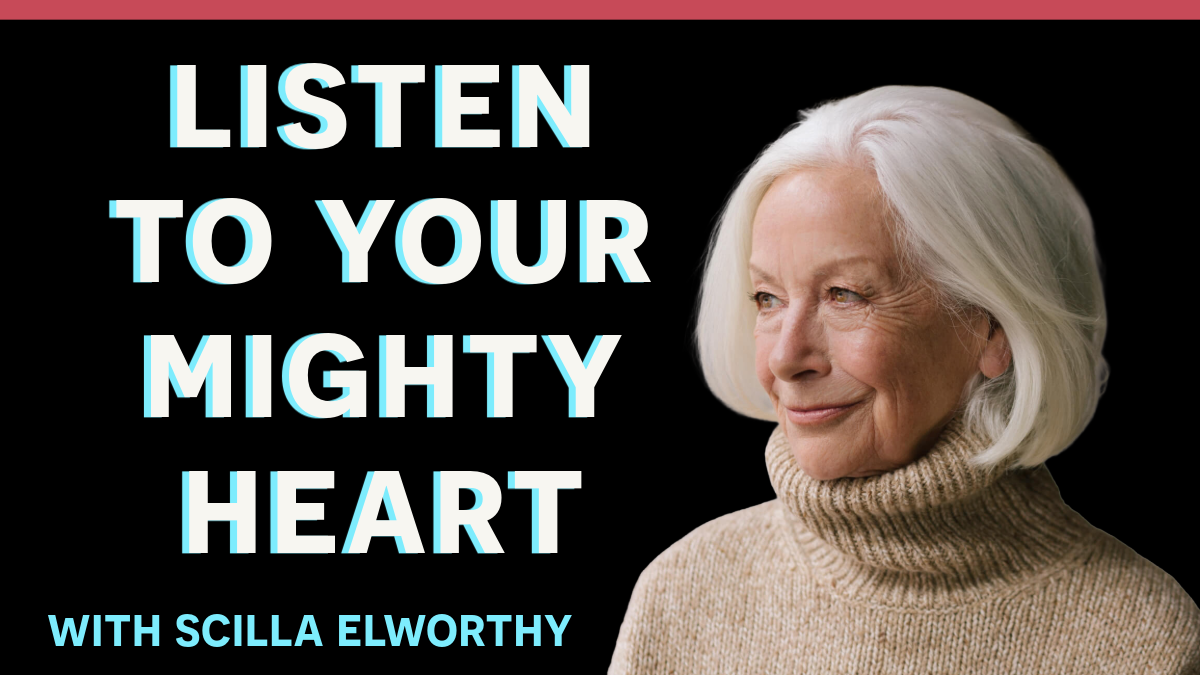
Scilla Elworthy is this week’s guest on Love and Philosophy, a production of Making Ways.
Three-time Nobel Peace Prize nominee Scilla Elworthy reflects on 70 years of work with conflict and war, beginning at age 12 after seeing tanks in Budapest and being sent to help concentration camp survivors. She describes how the suffering of others suffering hit her heart and led her to action in Algeria, the Congo, and South Africa, where she worked on starvation relief, shipped milk powder, and supported education, noting the central role of women in community resilience. Elworthy emphasizes “listening with the heart” to discern what people truly need beyond narratives, and explains how turning to the heart helps release harsh self-criticism. She also shares practical self-nourishment through nature and gardening, and recounts using humanizing, vulnerable moments—like discussing children—to soften high-stakes meetings, including military dialogues in China, as a way to build connection and “power with” others.
“Triple nominated for the Nobel Peace Prize for her work with Oxford Research Group to develop effective dialogue between nuclear weapons policy-makers worldwide and their critics from 1983-2003. Founded Peace Direct in 2002, awarded the Niwano Peace Prize in 2003, the Luxembourg Peace Prize in 2020, the GOI Peace Award in 2023. Founded The Business Plan for Peace based on her latest books - The Business Plan for Peace: Building a World Without War (2017), The Mighty Heart: how to transform conflict (2020), and The Mighty Heart in Action (2022).”
the Kyla Scanlon post briefly mentioned here
00:00 Why We Still Kill
00:55 Action Over Apathy
01:07 Heart As Guide
01:39 Inner Critic Quieted
03:23 Podcast Introduction
07:03 Meet Scilla Elworthy
08:17 Tanks In Budapest
11:32 Early War Witnessing
14:33 Africa Conflict Journeys
17:47 Women Leading Change
19:52 Listening With Heart
22:29 Defining The Heart
25:31 Nature As Nourishment
29:35 Self Inspection To Embodiment
32:41 Taming The Inner Critic
34:04 Heart Led Self Compassion
35:54 Daring Diplomacy With Generals
36:49 Breaking The Ice With Humanness
42:48 Power With Vulnerability
47:24 Courage In The Moment
51:07 Love In The Garden
53:03 Closing Thanks And Future Fears
53:55 Listener Note And NYC Event
transcript:
Scilla Elworthy on Love and Philosophy
[00:00:00] Why do we, humans who have so much knowledge now and so much information and, and we know so much, why do we go on killing each other? And what's wrong with the people out there, uh, in the parliaments and governments to keep this absurd way of trying to solve disputes down to who's got more guns? Yeah, I think so.
I think it action was very important for me. I couldn't, I couldn't bear to see, I couldn't bear to laser about and read books and be a student just when. People were suffering so much. Um, and it was, it was their suffering in their being their heart. That hit my heart. So it, although I didn't really wouldn't have phrased it that way, but that's what stirred me.
I couldn't really do anything else. I couldn't get a job as a [00:01:00] secretary or. Well, I was a student, but I couldn't do the normal things while all this was going on. it's, um, listening with the heart so that it becomes a process of one heart, hearing another heart, and I can do that, but my heart will tell me what this group of people need.
Really need, and it might be food, but it might be, it might be a hug. It might be to be cuddled. It might be to know that their father was going to come back or whatever it is, and the heart will give me that information or give me the right question to ask them. 'cause my inner critic was, was a massive thug for a long time.
You know, I, I didn't do this well enough. I'm not clever enough. I didn't take enough risks. All that that goes on in, in our heads. And that was really the tip off, I think, to get more into my heart because my heart doesn't do that. Neither does he owns the [00:02:00] heart has, if we listen to it, it has. Profound.
Good sense, practical, good sense. It will say that. Not bad, just go into your heart and say, could you hold, could you handle this for me, please, my heart? 'cause it hurts. And gradually it took. Decades, but I realized that what people really responded to and how we got, got the job done, so to speak, of connecting and building things together and all that was if I took off my persona and my achievements and all that and just confessed to, oh, you know, I'm feeling, I've got a bad feeling at the moment and I, I need to just.
Digest it for a minute before we open this conversation to your mind. You know it in a single flash of a second, you may be offered an opportunity which may lead to saving someone's life or whatever it is. You know, [00:03:00] it, it's it, the heart justice, such a guide. It's astonishing. The power is the responsibility and the.
I think the, the, the key is the moment to be present in the moment where you become aware that you have the power to contribute something.
Andrea Hiott: Hey everyone. Welcome to Love and Philosophy. This is a podcast which is trying to remind us that care is in our very cells. Love is radical, and it's what really all of us are doing here and are trying to help one another.
Do. It's about philosophy, but not just something that we study. It is about academic philosophy. Quite often we have academic philosophers and neuroscientists on the show, but it's also about how we live and philosophy as a practice, as our living.
And today is one of those episodes. It's with a woman who has been nominated for
The Nobel Peace Prize three times a woman named Scilla [00:04:00] Elworthy.
Mostly for her work with the Oxford Research Group, where she was, for example, negotiating nuclear weapons with policy makers and basically trying to bring more peace into the world, more care into the world.
And this conversation is. A sort of demonstration, I think, of what she brings and the philosophy of the heart. She's been doing this a long time. She's 82 years old as you'll hear. She founded Peace Direct in 2002. She received the Nano Peace Prize in 2003, the Luxembourg Peace Prize in 2020. Another Peace Prize, the GOI Peace Award in 2023.
And the list goes on. She also founded The Business Plan for Peace, and she's an author and she's written a lot of wonderful texts and books such as The Mighty Heart, how to Transform Conflict, and the Mighty Heart in Action. I'll put links to all her work in the show notes, but. I wanna keep this intro just a little bit shorter because what it's really about is said so well in the conversation itself, [00:05:00] and I think it speaks past a lot of the noise that many of us are hearing right now.
The kind of noise that makes us wanna turn off all our devices. Kyla Scann just wrote a wonderful piece about how we're sort of being manipulated by our very desperation, the creation of desperation, and then sort of things getting sold to us to help us control that desperation. But it's a very vicious, ridiculous loop. It's connected to competition and. We could reframe through care and that's what I have been talking about a lot and I hope we can do, and I think so many people are already doing, and this is one of them.
Silla is definitely showing us how to listen to the heart as a philosophical text in a way, or a philosophical bodily friend that we all have within us, and that is not weak. I hope we can all remember that what we give our time and energy to is making whatever we're giving our time and energy to stronger.
And I think there's a kind of [00:06:00] illness. That we're all noticing in a lot of people that seem to be powerful or successful, just remember the reason people are powerful and successful is because others give their attention to them. So what do we wanna give our attention to? That's really the question. Who and where and what does not make us feel desperate and helps us help others not feel desperate.
Those are the real powerful forces right now. Let's find them. Let's help each other, make them, let's be them. I think this, today's guest has been doing that for 70 years, as you'll hear, and as she says, it hasn't been easy. It's not that she's done it perfectly or always had the answers, but at 82, she knows that the heart is strong.
I wanna thank Mark, mark McCartney of What is a Good Life because he is the one who introduced me to Silla.
He put us in contact thinking we would've a nice discussion, and he was right. So. Lots of gratitude to Mark and check out his work if you get a chance.
And I think we can listen to that and we can learn from her. And I just wanted to share this with you today. With that in that spirit and about how literally sometimes the most powerful person and the most powerful presence in the room is one that's listening. So thank you for listening to this, and I hope wherever you are today, you fill some heart and you fill your heart, and you ask your heart for help, and your heart responds.
Okay. [00:07:00] Bye. Hello, Silla. So nice to have you on Love and Philosophy. Thank you so much for honoring us today and coming on the show.
Scilla Elworthy: It's a great pleasure.
Andrea Hiott: there's so many things about you and your work that are very moving for me, but I thought I'd give you a chance first, just what would you like for people to know who might just be hearing your name for the first time off to start?
Scilla Elworthy: Oh, I would like to transmit a message, um, to the people who watch your show about the importance of the heart today for everybody and for the world. Um, after working with conflict and war for 70 years, um, I started when I was about 12 and I really feel that, um. The, um, the importance of the heart today is grossly underestimated [00:08:00] and the more one works with the heart, the more you feel the power of it.
So I'd love to come to that, but I'm happy to, um, respond to any questions you have about, uh, how I got here and what, what I feel is important today.
Andrea Hiott: Well, let's think about that young girl. So were you about 12, 13, early teens when you saw the tanks rolling in to Budapest? Is that the moment that you sort of
Scilla Elworthy: Yeah.
You've done your homework.
Andrea Hiott: Thank you.
Scilla Elworthy: Um, yes, I was, um, brought up on a very, um, safe farm north of, uh, London. Um, my folks were farmers and I. Um, was at a school where they opened our eyes to what was going on in the world. And, uh, that started me watching TV and listening to the radio. And I saw the, um, the.
Uh, [00:09:00] uprisings that were going on, uh, all over the, um, eastern part of Europe. And, um, I wanted to go and, and do something and help. Um, and so I've always been, um, moved by, um, killing, suffering and. Um, I had a mother who had been, uh, uh, very active in the First World War looking after wounded soldiers and, 'cause my father was in the first World War fighting and she, um, was a great traveler, but she would do anything to, uh, see what she, how she could help with the debris of war and the, and the casualties.
And she was driving. Uh, wounded soldiers from an airport outside Edinburgh where she lived, um, to the hospital to get them, um, [00:10:00] attention and so. And she took me traveling very early on. Uh, she took me to Kenya in Africa when I was eight or nine. And, uh, so I got a, a habit of travel from her. And, uh, she was also very inquiring, very interested in other people, and I'm infinitely grateful to her for making me unafraid of, um, opening a conversation with anybody.
Andrea Hiott: So when you, when she saw you reacting this way to the tanks rolling in, I, I, I think you wanted to go, go there. Did you start packing your suitcase or something? You seemed to have been,
Scilla Elworthy: I did
Andrea Hiott: action oriented.
Scilla Elworthy: Well, I watched a TV program when my parents were out and I was so shocked by what was happening that I went upstairs and started packing my suitcase and my mom came in and said, what are you doing?
And I said, I'm going to a Budapest in Hungary. [00:11:00] And uh, she said, what for? And I said, there's something so horrible going that on there. I have to go now. I think I was 12. And she said, don't be so
silly.
And, uh, and I burst into tears. And so then we opened a conversation, which was one of many that we had about, um, the fact that she had got herself involved in the casualties of the first World War.
And I now wanted to do my bit and insisted that I had the right to do that. And, uh, eventually she got it and well, she, she was quick to pick it up and she sent me off to work in a holiday home for concentration camp survivors. Um, uh, not very far from where we lived. And I sat on the grass in the peeling potatoes and listening to their stories of what had happened to them in the Second World War.
Um, the concentration camps, [00:12:00] the, uh, appalling suffering, and there was something so. Honest and natural in the way that they, they weren't humongous at all. They were just telling me what happened. And I was so moved that I started to keep a diary about it and write about it and got more and more interested in, into the debris of war and the terrible tragedies that war brings about.
And often the people who have started the wars. Have no idea of what they do to people's lives. Um, and whether they are people in destroyed villages who have to flee for their lives or whether they are the children and relatives of soldiers who get killed. And, and it just, the whole thing seemed to me to be so absurd.
Why do we, [00:13:00] humans who have so much knowledge now and so much information and, and we know so much, why do we go on killing each other? Um, and what's wrong with the people up there, uh, in the parliaments and governments to keep this absurd way of trying to solve disputes down to. Who's got more guns?
Andrea Hiott: I wonder how you, at that age and also through your life, were able to hold that. one, one thing I love reading your work and listening to you is it's so bodily and you're, you're really. Present and you're really feeling it with your body. But I think this can be very hard for people too, or, I wonder if it was hard for you when you were young to notice this violence and this pain, when you were writing or you were already processing it somehow, as Living body, not [00:14:00] just it, it just seems very immediate in the way that you noticed it. But I often hear it presented as a kind of abstract problem.
Scilla Elworthy: no, it wasn't abstract at all. It was in my heart straight away. My heart hurt, um, and I couldn't avoid the information that I know. As a teenager knew was available and somehow the, the more I could find out about it, the more able I felt to do something about it.
So I went aged, I dunno, 17 or 18 to Algiers where there was a war going on in Algeria. And then from there progressed down through Africa, through the Congo, which was at war at the time. Um, and all the way down to South Africa, which as you know, is a very violent country. And, um, and I stayed there for quite a long time, [00:15:00] um, working with, mainly with starvation because, um, although South Africa is a very rich country, the, at the time when I went there, um, in my early twenties.
There was starvation right through the so-called homelands where black people lived and not much was being done about it. So I couldn't help but get involved with a, um, a nutrition co company, which distributed very basic high nutrition food stuffs to people. Um, in conflict areas that who really needed it, and that felt very real and practical.
And you saw that, you know, you helped people save their own lives. Mm-hmm.
Andrea Hiott: So you were acting I know you probably didn't think about it like this at the time, but was that your way of dealing [00:16:00] with that pain or that
Scilla Elworthy: Hmm.
Andrea Hiott: Because even as a young kid, you immediately went to pack your suitcase and then, you know, you're so active in such, it's, there's so much action immediately.
Do you think that was the way you were able to handle being able to handle that, that difficulty?
Scilla Elworthy: Yeah, I think so. I think it action was very important for me. I couldn't, I couldn't bear to see, I couldn't bear to laze about and read books and be a student just, um. When people were suffering so much. Um, and it was, it was their suffering in their being their heart.
That hit my heart. Um, so it, although I didn't really wouldn't have phrased it that way, but that's what stirred me. Um, I couldn't really do anything else. I couldn't get a job as a secretary or. You know, be a stu, be a, well, I was a student, but I, [00:17:00] I couldn't do the normal things while all this was going on.
Um, and in some cases going on, not very far away. So I, I wanted to roll up my sleeves and say, you know, let's do something. And that's where in South Africa, I started various organizations to help distribute food stuffs to starving people, but also to get education going for young black children. And um, which was very little, little attended to, um.
And it's much better now. Much, much better now.
Andrea Hiott: So much has changed since the apartheid. It's good to remember that things have changed. I also seem to remember it was during this time you started to notice how powerful women are in the community.
Scilla Elworthy: They were, they were, and using minimal, minimal tools or supplies, they didn't have mobile phones. Of course, in those days, [00:18:00] they had no really no communications at all, except verbal.
Um, and song, song was very important, um, but also to help them find ways to help themselves, so set up systems whereby they could access, for example, milk powder. Because many of them, through starvation or whatever, their milk had run out and they had small children and they were desperate. So milk powder was terribly important.
It wasn't very tasty or nice, but it was better than nothing. And so we shipped huge quantities of milk powder out to the so-called. Um, reservations where the poorest of the poor were sent away to staff, and, um, and that was, that felt good. Um, and to, to go and see how, [00:19:00] um, helpful it was for them. Mm-hmm.
Andrea Hiott: Taking care of the women in that way? Sort of, you saw it reverberate, I guess, if the women were stronger or,
Scilla Elworthy: yeah. The women were, were aching to take part and. F almost elbowing their way into, um, organizations, um, trying to be part of white organ, white run organizations who were often very un unfriendly to them.
Um, they were trying to get the kids educated that was high on their agenda because they knew that being educated and and literate was the way to. Uh, free themselves and free their families from starvation.
Andrea Hiott: Mm-hmm. In, in all this action oriented, you're acting so much, but I feel like you were also listening.
Do you remember when you started cultivating that [00:20:00] sort of power of actually. You know, listening this, I,
Scilla Elworthy: I think that's become really central to my life and my work and I, any young people, uh, wanting to start and do that kind of work, I encourage them to spend a lot of time really listening. 'cause most of the time you're a very good listener, but most people aren't they thinking what they're going to say or how to make a clever remark or tell their story or whatever it is.
But the more we can actually. Listen to what's really going on for somebody who's in trouble, particularly somebody who's, um, suffering in some way and really, really tune into what it is they need, then we can be far more help, far more quickly, um, than just getting carried away with the emotions or the story, but to get listen in such a way that you get below the narrative and [00:21:00] into.
What is really needed? 'cause it might be food, it might be water, but it might be safety, you know? Mm-hmm.
Andrea Hiott: And it sounds like this kind of listening isn't only listening to words. Is it a, is it a, it's not just, have you noticed there's different sorts of language that you. That you listen to?
Scilla Elworthy: Yeah. Well, it's, it's, um, listening with the heart so that it becomes a process of one heart, hearing another heart. And that's when you learn what it is you can do that's most useful. If you're just living, listening with your head, you're making plans, you're writing budgets, you're doing all that, which is great and it needs doing, but when you tune in to somebody in trouble with your heart.
Really listen to them. They will open up, uh, um, a [00:22:00] treasure chest really of what it is they really need. Um, and it may be that they want to bury their grandmother. Uh, properly, or, and they might not tell you that straight away, but, um, if, if, if they know that you are attuned to them, not just with your mind, but with the rest of you, they will reveal to you much more quickly what Disney really need.
Andrea Hiott: Mm-hmm. What do you think of as the heart for some people listening? This, there's so many different people coming from different walks of life, and so heart is gonna meet so many things to so many people, coaches, philosophers. So how do you think of heart? I'll tell you how I'm imagining when I hear you say it.
Mm-hmm. I'm imagining kind of your whole body open from, from this most vulnerable place. Um. In a way, but I'm also imagining that as a kind of strength, like a kind of, almost like a, you know, that sort of protects you in a way at the [00:23:00] same time that it's the most vulnerable opening. That's kind of the image that comes to mind when I hear you say it, but maybe you can help us understand that word.
Scilla Elworthy: You, you push it really beautifully, Andrea. That's very much the same way as I see it. Um, but it took me. Yeah, I, I'm sad in a way. I mean, my heart was obviously going out to people in trouble, but now, um, and over the last say 20 years, I've, um, used my heart. If it's not pretentious to be a sounding board for action, my brain will say, oh, you know, go and raise some money, or.
And I can do that, but my heart will tell me what this group of people or children really need, really need. Um, and it might be food, but it might be. It might be a hug, it might be to be cuddled. It might be, um, to know that their [00:24:00] father was gonna come back or whatever it is, and the heart will give me that information or give me the right question to ask them, you know, are you worried about your dad?
Um, yeah, I'm, I don't think he's gonna come back, you know? Then you know, more, more, more detail about what's really necessary.
Andrea Hiott: That's very powerful because I was thinking of you when you're a little kid and it sounds like you're very much, Seeing yourself in what's around you, if that makes sense. Not, not demarcating so much in terms of I'm separate from what's around me.
I'm not saying you're thinking that way, but you know, you're, that immediate action and needing to take place feels very much as if what you see happening is part of you. Mm-hmm. and that can be very overwhelming and difficult, right. When you feel all of that so much, and [00:25:00] I can imagine that some people would've gone, would've tried to, you know, there's these things of, put it, create a tower of books around yourself or create some kind of shells around yourself.
not go directly even deeper into the action. also what comes up when you were talking is, I've been thinking, I've been feeling lately, the more you can just be present, you, you are in a communication with ever with whatever's around you without even you don't have a choice, if that makes sense.
it's
Scilla Elworthy: certainly mysterious. It's certainly mysterious, but. The thing that I've learned is that, um, we need, those of us who choose to do this kind of work, need to nourish ourselves.
It can run out of juice and then you do bad work. You do stupid things, so. I've found, and it might be different for different people, but for me, being in nature is vital. I need to touch and be in trees and walk on the [00:26:00] grass and, but also having a garden is an absolute, um, it, it, it's like medicine. Um, uh, it doesn't matter how big it is, it can be a little tiny plot, but growing something.
For yourself and for other people is utter nourishment because you are getting your fingers dirty. You've got your hands in the earth, you're planting the seeds and you forget everything else. Then you forget everything. And so, um, it sounds a bit, sort of from. Uh, privilege, but a little, tiny plot of land or, uh, um, even a window box outside your window, um, to put things in, to plant things in that will grow and surprise you and you can eat them or love them or whatever.
And [00:27:00] that is, even if it's on small scale. But growing a garden with other people who are underprivileged is, um, often a, a soul restorer for them. It restores their soul because they can be useful, they can plant things that will grow and feed, feed other people. Um, and they, uh, they sort of expand when they can.
When they can do something with the earth, um, and the Earth responds of course.
Andrea Hiott: that's exactly what I was trying to get at with that communicative thing. You know, communic, there's some that, that's a perfect example of it, of participating in this together, you know, with the people around you too.
I wonder when you, when you noticed that, or when you realized that kind of, was that early on too, that you. How did you take care of yourself? I'm still kind of thinking about this young woman who's in [00:28:00] these situations, and how did you find to, did, did you find that early on to go out into nature and restore yourself or
Scilla Elworthy: one way or another?
Yeah, but I don't think I learned it tangibly. I don't think I thought, ooh, you know, I've been traveling for three days. I better get out and, and get my feet in a stream or something.
Mm-hmm.
Um, but I, I just gradually learned that if I didn't. Um, if I didn't get out and feet on the ground, um, I would be more heady and less useful.
Um, I, I, I'm, um, um, workaholic often, and I have spent many years in my thirties and forties. I, I'd done laptop, literally all typewriter as it was then, just trying to get through. Files of paperwork and starving myself. And it took me until my [00:29:00] forties and fifties that, and having children helped, um, because they would say, oh, we've gotta get out, mom.
You know, and, um, and they would lead away. And so. It became almost, um, a part just daily part of life to spend at least some time with vegetables and digging and that kind of thing.
Andrea Hiott: It's so wonderful. It's also that bodily presence that I feel in your work too, of really, being bodily engaged with whatever's around you.
But also there's another part of your work was, which is this. Know thyself, self-inspection kind of in a way that right now we hear we're not supposed to do. I mean, from, from tech people at least. There's been some interviews recently where they say, don't inspect, don't self-inspect, just act. And I don't hear you saying that either.
So I'm wondering how that arose for you too. because I feel like for you, that's also this heart and this body, it's [00:30:00] not. In the head either, but I, I wonder from your point of view, how that fits with what we're talking about.
Scilla Elworthy: Well, it was in the head a lot. I mean, I had the privilege of having, being able to have a, an intensive course of, um, what you might call, um, well therapy with, with a knowledgeable older woman and.
Uh, and, and I read a lot of psychology and, uh, and I was deeply curious, but then, um, I realized that, um, it, a lot of it was staying in my head and driving my head, and I didn't, I didn't realize it categorically for a while, probably until my fifties. I think menopause was very helpful in that, that I.
Really got more into my body. And, um, so, um, [00:31:00] being able to translate what's, um, troublesome out there into what can my small gifts be able to contribute to that situation or that person. And, um, um. It was, your questions are very good 'cause they're helping me really think about, um, what, what grew this passion for understanding the connection between my brain and my heart and my body.
Andrea Hiott: Yeah, because you feel very rooted and present in your body now with the heart. Mm-hmm. But I'm thinking, you know, I'm half your age, so like how, how do we get there and how do we focus and, and, and grow into that? but also I'm thinking about the work you've done, which is very significant and has a lot to do with you.
You have to introspect, but you're also having to be present with people who are maybe [00:32:00] not introspecting, maybe very difficult, wanting very different things. And you know, you talk about his bullying sometimes I think in a way, or, or this violence, right? This kind of regression, I guess I'll bring that word in, that can be very hard to face right with the heart, this vulnerability and this listening.
and I wanna bring that up a little bit. Also, the idea of the inner critic, which you've talked about, and I don't know if those are connected, but that, that way that we criticize ourselves or we see others criticized. And how that can become a kind of false power or bully. Uh, I don't know if I'm, if that's making sense or what that brings up for you
Scilla Elworthy: because my inner critic was.
Was a massive thug for a long time. Um, you know, I, I didn't do this well enough. I'm not clever enough. I didn't take enough risks, you know, all that that goes on in, in our heads. Um, and that was really the tip off, I think, to get more into my [00:33:00] heart, because my heart doesn't do that neither does yours or anybody.
Heart doesn't. The heart has, if we listen to it, it has profound good sense, practical, good sense. It will say, you know, that not bad. Um, and um, so the heart is just incredibly good at information when we need it. Um, now I'm not answering your question, which was, um, how do we. Well, how do we deal with self-criticism for one thing?
Um, I think self-criticism is not a bad thing. If we listen to it with a kindly ear, you know, not, um, I'll beat myself up again, which a lot of us do. Um, sometimes we try and hide it, but we do beat ourselves up and that's very so dis disenabling that it's, it needs to be [00:34:00] dropped. It needs to be dropped.
Andrea Hiott: Thank you for saying that. I think that's gonna be a relief for some people just to hear that you don't have to, you know, you don't have to even criticize yourself for criticizing yourself.
Scilla Elworthy: Just let it go when it comes up. Oh, I didn't, oh my God, I forgot that. Or I didn't tell that person that, or I hurt them.
Just go into your heart and say, could you hold, could you handle this for me, please, my heart. 'cause it hurts. And um. That gives me shivers actually, just even to say that,
Andrea Hiott: that gave me too
Scilla Elworthy: Yeah, because the heart will say, no problem, just leave it with me and, and off you go. Um, and the heart can digest, it can digest shed legs of it and, and leave relieve us of self.
Mutilation and self-harming [00:35:00] in whatever way we do it because we just do an injustice to what our good, healthy, heartfelt motives are.
Andrea Hiott: Yeah, it's more like the garden or that communication of that natural communication, that there's something nourishing in what you said and generous, which is like a garden, when you care for it.
I guess I wanna see how that, because this feels to me very related to even this very high level sort of work, trying to help, you know, negotiate about nuclear weapons or whatever, all these big topics that could seem far away from that. it, it feels, I wonder about your journey, or if this was connected in you finding a way to connect with your heart and listen, and also that being a way you could be present with other people in these other situations.
Was that happening at the same time or?
Scilla Elworthy: Well, it was also, um, daring. Do, do you know that expression daring?
Andrea Hiott: Do Yeah. Throw yourself in kind of, [00:36:00]
Scilla Elworthy: yeah. I, I, I thought, um, and partly because I was brought up with, um, people in my family who'd been in the army and so on, I thought, well, I can do that. You know, I can talk to generals and they're not such big deal.
Um, and, um. I always had this sort of chutzpah, you know, chu? Mm-hmm.
Andrea Hiott: Oh yeah.
Scilla Elworthy: And um, I thought, well, I'll have a go, you know, I'll, I'll ring up that, um, kernel or admiral or whoever it is and, and nearly, I mean, it's hard to get through to them sometimes 'cause they always have armies of people protecting them.
But if you have a good reason and a good question you can normally get through, but, um. Once, um, once I witnessed what happened, when I took, for example, I took a delegation of British [00:37:00] Army, Navy, and, uh, air Force, very senior people and some of the bureaucrats who supported them and supplied them with their ships and stuff.
Um, and I. I always treated these men with great respect. I didn't despise them because I knew they were many, doing many honorable things, uh, honorable work. And I took them to meet their opposite numbers in China. And uh, at first it was a row of Chinese, one side of the table, very stiff. And me and my admiral from generals on this side and.
We needed to break the ice. We needed to show that we were humans because the Chinese were very nervous. 'cause if you put a foot wrong as a senior person, uh, or any person in, in China, and you didn't do what was expected of you, you gave a wrong response. You, you [00:38:00] really had a hard time. And so my job was to really try to, um, to, um.
I was gonna say moist in the atmosphere to soften it to um. To say yes, we have some very serious things to discover and dis and discuss, but meanwhile, it would be just lovely if each of you would talk about one of your children or the child that you are very fond of for a minute or two. And if you have a photograph on you, great.
You know, show it. And we and our delegation did the same and that just changed everything. Um, and keeping it short, the whole thing took maybe 10 minutes out of a three hour meeting, but the conversation over coffee was completely different. Did you really have a, how is your blind grandchild now? Or, um, you [00:39:00] know, how does your wife feel about you doing this work or whatever it was?
Andrea Hiott: Oh, that's just beautiful. I love that. It's such a shift of perspective. And actually it was something I was going to ask you about is, like how you, how you don't condemn people in your head or in your heart. If you've come into a room with someone who's very dangerous or who you know has hurt a lot of people, you know, according to whatever story you've been told, but you just showed me actually, it's kind of.
somehow shifting out of that current situation, right? Almost what you did is a little bit, like you said, something about surprise earlier or you like surprise and there's some kind of element of, of doing what you wouldn't expect one to do or something. Does that make sense? Kind of. Yeah.
Scilla Elworthy: Absolutely. Breaking the mold, um, as much as you can, doing something unexpected, natural human. Um, and, um. Uh, let's see. It's, it's [00:40:00] like, um, like sending a little message on a, on a dart or an arrow over into the other. Consciousness, which is quite, maybe quite protected, and, and people on their best behavior and worried about making a mistake and, and sending a little message.
I'm, I'm human too. And or talking about a mistake you made, um, or even. In one instance, I had stumbled on the stairs coming up, um, to the meeting room. Um, and, uh, and before I said my name or anything, um. In my self introduction, I said, well, I'm the person who nearly fell down your stairs and it was my fault.
It's not your stairs fault, or something like that. And, um, and it was sort of, um, it was allowing people to be a little, [00:41:00] um, foolish or whatever. Um, and, and it, it all helps to get there. Humanness into the room.
Andrea Hiott: That reminds me again of what I was seeing earlier when you were talking about the heart, because you're opening the vulnerability in a way.
If you're talking about something like a mistake you made or your children, there's a sense of opening the vulnerability, but actually doing that is such a strong thing to do that you be, you are stronger and you appear stronger. So it's a very interesting way of, of both of those being there.
Scilla Elworthy: Well, it's about, um, allowing, uh, the humanness to come into what would otherwise be a very stiff and best behavior type of type of meeting. Um, and there's something else. Um, yeah, what, what I encourage people to do at mealtimes, um, was to, to tell their neighbor something about their children or their, Uh, uh, ne nephews [00:42:00] and nieces or schoolchildren that they knew. Um, and that opened up lovely conversations between them and somebody from a completely different culture.
Andrea Hiott: You know what's so beautiful about that too is that not only do you see other people as having families and with these histories and, you know, tangled up gardens, so to speak, but you also remember yourself that way.
Scilla Elworthy: Hmm. 'cause
Andrea Hiott: I, I think that's very important, right? Sometimes we go into these situations and we don't, we try to leave all that behind and we're a different presence then.
Scilla Elworthy: That's quite right. We're, we're our, um, uh, CV or our, you know, our achievements and so on, which often get in the way of, uh, an actual connection.
Andrea Hiott: Mm-hmm. Is this what you mean by power with, because. You talk about power with, which I think is really interesting. It's not just the power to do something or the power over something, but this kind of, which is often the way we frame [00:43:00] power. But I see or hear in your work that, that there's something about power.
is this community gardening or something?
Scilla Elworthy: Well, it's, it's, it's, um, it was my way of getting over, um, my, um, childhood and many of us have this and, and, and in my teenage, um, trying desperately to build myself up to be important and. Knowledgeable and effective and all those things. And I, I really was a nightmare I think, doing that.
Um, because, um, it, it was all producing a picture, which wasn't necessarily true at all. Um, and it was my image of myself. And I was very fond of it. Um, and it was about how I dressed and how I looked and all this. Um, and um, gradually, [00:44:00] oh, it took decades, but I realized that what people really responded to and how we got, got the job done, so to speak, of connecting and building things together and all that was, if I.
If I became more naked, if I took off my persona and my achievements and, um, all that and just confessed to, oh, you know, I'm feeling, uh, I've, I've got, um, a bad feeling at the moment and I, I need to just digest it for a minute before we open this conversation. Do you mind? And, and, and, and do that or say, um, uh, I'm, I'm.
Feeling bad this morning because I forgot to phone X and it could, we possibly interrupt the proceedings where I just make a quick phone call and it's annoying for people, but you know, if it's really important you, you can, you [00:45:00] can make the space for it.
Andrea Hiott: Thank you so much for saying that. I think this is what we really need to hear right now and what isn't happening or what we've, we don't think of that as powerful.
When you are, when you experience that in the moment you feel the room change and there's real power, if you can almost just be present with what the case is and state it.
Scilla Elworthy: That's it. What, what's the immediate, um, and. The immediate mean might mean you're desperate to go to the toilet.
Andrea Hiott: Mm-hmm. Which makes a big difference about your stress and frustration.
Scilla Elworthy: Yeah.
Andrea Hiott: But I think it's very hard to do because of all that stuff you just said, because we build up this, um. Way we wanna be seen by others. And often when you're gonna say the thing in the moment, it's not gonna really fit to that story. You know?
Scilla Elworthy: Exactly. You're destroying your carefully built image and, uh, and, and, you [00:46:00] know, giggling a bit like a child.
Andrea Hiott: Because there's a kind of ecstasy in it or a kind of, um, I think it has something to do with that surprise element or that I was trying to bring up and this, this not necessarily working from a blueprint, you know?
Scilla Elworthy: That's right. And, and, um, being a bit badly behaved or, um, you know, not following the rules.
Andrea Hiott: Yeah, letting yourself, I mean, of course you wanna fill into what is the real case, not just do that to be kind of crazy, but, you know, feeling into that it's a powerful place, I guess, is, is the pain.
Scilla Elworthy: It has to be in the mo you, you've nailed it because it's not, you can't come in with something, oh, I'm going to do that to shock them.
No. Um, it has to be in the actual moment, um, or. You know, taking a, a, a, a fellow female guest aside in a frightfully important meeting and saying, have you got your [00:47:00] tam packs? You know,
Andrea Hiott: these kind of things. You know, they, they, they, they make a difference. I think we get sort of prompted to do that.
We, we have this feeling, oh, I should say this because it's so real and often we don't listen to it. We let it pass. But if you can start to learn to listen to those moments of, of Yeah. I don't know what it is. Prompting from a real place, it's amazing what they can lead to. uh, that makes me think of all the women that you talked about in your examples too, because, the women who you talk about is courageous. they're also coming from places where they have to be in the moment and not just taking things, down.
Have you, have you found that as a source of real change, I guess in the world too? Is. Not just, yeah, I don't know what it is exactly except I'm, I'm trying to think of what enables people to act in the moment with courage, even when their life is maybe at stake. Is it connected to this heart in the way to bring it back to that Oh
Scilla Elworthy: yeah, it is because your heart knows [00:48:00] what the moment needs and it's, I, it is taken me all my life to get there, but.
If I don't know what is needed in a room or a, a meeting with somebody, I have to just breathe three or four times quietly into my heart, and my heart will say that, you know, talk about that or ask for what that person needs in terms of that. And it's, it's, it's. Um, it always reveals something more real than any sort of polite conversation would reveal.
Andrea Hiott: That's that real power and energy, that real change comes from, which you speak of a lot in your work. I guess before. Yeah.
Scilla Elworthy: You know a lot about it, or you wouldn't be interested. You wouldn't have arranged our conversation today. In this way and [00:49:00] ask me these questions because you, you already know all this, which is lovely.
Andrea Hiott: I've felt it and I want others to feel it. I think it's similar to how I feel that in you too. You know, you, you're, you really want to give this and mm-hmm.
Scilla Elworthy: And
Andrea Hiott: I really want people to realize the real power in this, and it's a different kind of way of living. I think
Scilla Elworthy: it is. Um, because it's very momentary.
You know it in a single flash of a second, you may be offered an opportunity which may lead to saving someone's life or, um, their marriage or whatever it is. You know, it, it, it's the heart. Justice is such a guide, it's astonishing. And just, just to take that fraction of a second, ah, you know. I mean, what Princeton prompted me just now to turn the conversation back to you.
I wasn't doing it to be polite. [00:50:00] My heart took me there and said, you know, this is a really interesting woman. Talk to her, not just as an interviewer, but talk to her as the really, uh, profound woman she is. And, and it was a joy.
Andrea Hiott: Well, thank you.
Scilla Elworthy: Mm-hmm.
Andrea Hiott: I really appreciate you and your work, and I think you just kind of demonstrated it, which is, is is really very beautiful that you, you did that because just thinking of that little girl that we started with, there was a kind of responsibility to it.
And I think that's what I feel in this is that this power with, and this sharing and this, in a good way, right? Uh, the power is the responsibility, if that makes sense.
Scilla Elworthy: Mm. Yes. The power is the responsibility and the, I think the, the, the key is the moment to be present in the moment where you, where you get, uh, become aware that you have the power to [00:51:00] contribute something.
Yeah.
Andrea Hiott: Yeah. And you definitely have, and I wanna say thank you. And I also, before we go, wanna offer if there's any experience of love or any. Anything at all that you wanna share, uh, before we, before we end for now? Um,
Scilla Elworthy: an experience of love.
Andrea Hiott: Yeah. I always ask at the end because it's love and philosophy, so you don't have to say anything, but I always wanna give people a chance if anything comes, if anything arises.
Uh,
Scilla Elworthy: I spent the weekend with my nephew and his wife, who are both gardeners and both holding down very big jobs in, in, um, institutes as well. And we went, um, into their garden and they, they were just telling me what was growing there and the connection that there was between the four of us just touching the leaves or smelling the, the, the.
The, [00:52:00] um, vegetables or whatever was growing was so, um, deeply connecting and it, um, it, it was a source of nourishment. Um, it doesn't really answer your question, but it was just, it moved me a lot that it was, um, it couldn't have been pre-thought or prearranged. It was just there.
Andrea Hiott: That's actually really beautiful.
It reminded me of when we were just going back and forth in our emails, I said something about is love of the skeleton or the scaffolding? And you were like, no, love, love is the, is the change. Right? It changes what we perceive, which changes what we do. And I love that you did that because it made it alive again.
I was trying to make it into some structure.
Scilla Elworthy: Hmm.
Andrea Hiott: And you put it into the life. And I think that example you just gave really says that, that love, that kind of love that you just express change is what's possible, right? That the perception of that garden or that plant, and also you know what it's [00:53:00] doing.
So thank you for that.
Scilla Elworthy: Well, thank you, Andrea. It's, uh, been a terrific conversation. I've really enjoyed it. I'd, I'd really like to learn a bit more about what you do.
Because you're asking to me, you're asking all the pertinent questions of today now. and unless we wake up ourselves and everybody we can touch now, I fear for the future.
Andrea Hiott: Me too. And that's why I was so connected to your message because it. It's such a strong message that I, I can't imagine we need anything more right now.
I really want us to come into that caring and that body and that power of that not as a, it's soft, but it's so powerful it's a whole different way of being in the world. Right. I don't want people to miss it.
Scilla Elworthy: Good, good, good. Thank you so much.
Thanks a lot.
Andrea Hiott: I really appreciate it.
Scilla Elworthy: Okay.
Andrea Hiott: Bye.